This glossary defines the 34 converting terms that come up in a specification for a die-cut adhesive part: material construction, cutting processes, delivery format and adhesion testing. Most definitions explain what the term changes for your part, and the summary table gives the French equivalent used on our drawings and quotes.
Why a shared vocabulary matters
A die-cut adhesive part goes through several hands: the design office that draws it, the buyer who sends the RFQ, the converter who makes it, then the line that applies it. When one says “web width” and another says “roll width”, or a drawing says “cut” without stating kiss-cut or through-cut, the quote is built on an assumption. The gaps show up later, when the first lot arrives.
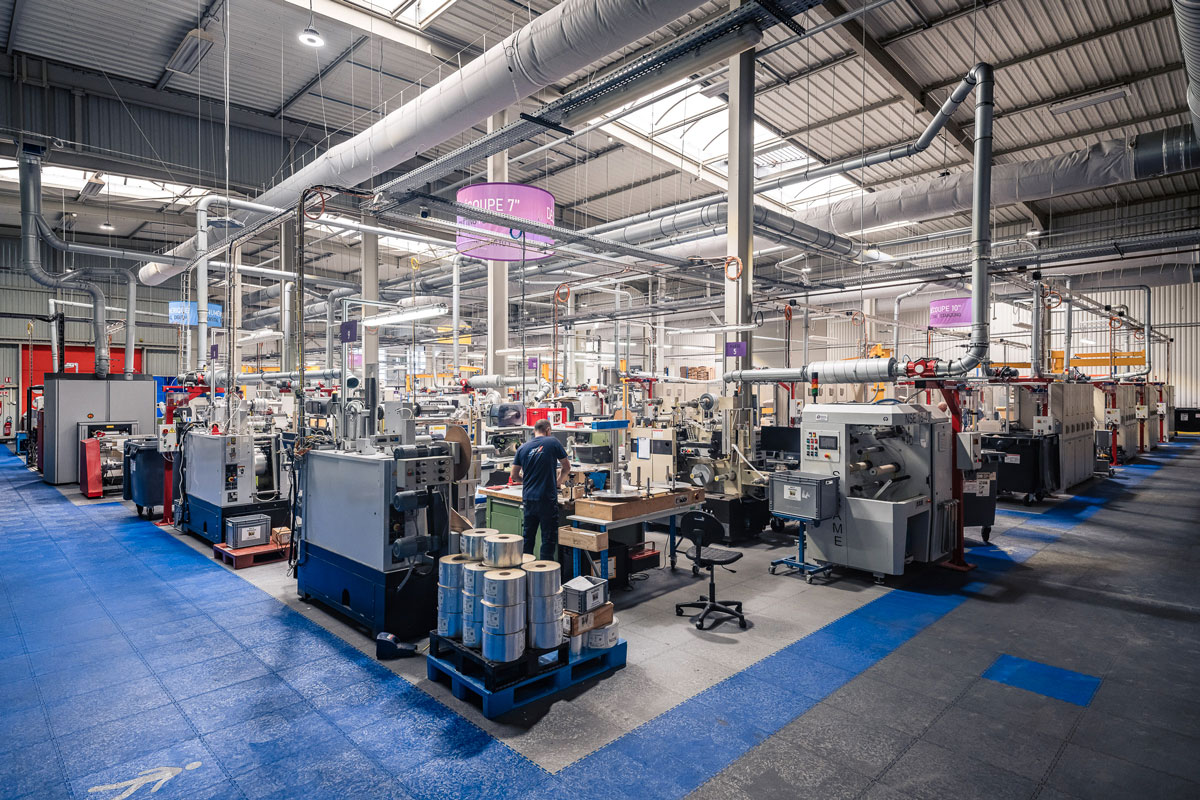
The terms below are the ones we use every day with our customers. The definitions rest on three sources: the tests follow the FINAT test methods (FINAT is the European association for self-adhesive labels), the adhesive definitions come from Avery Dennison’s Adhesive Technologies technical guide, and the causes of matrix breaks from a FINAT article on waste matrix removal. The capabilities given for ATE are those published on our technical pages.
All 34 terms in one table, with the French equivalent
| English term | French term | In one line |
|---|---|---|
| Pressure-sensitive laminate | Complexe adhésif | The material as supplied: face stock, adhesive and liner |
| Face stock | Face (frontal) | The top layer, which carries the print or the function |
| Permanent adhesive | Adhésif permanent | Cannot be removed without damaging the part or the substrate |
| Removable adhesive | Adhésif enlevable | Holds in service, comes off without damage |
| Repositionable adhesive | Adhésif repositionnable | Can be lifted and placed again during application |
| Double-coated tape | Adhésif double face | A carrier coated with adhesive on both sides |
| Transfer tape | Adhésif transfert | An adhesive film on its own, with no carrier |
| Release liner | Liner | The silicone-coated backing removed at application |
| Surface energy | Énergie de surface | How readily a surface is wetted by the adhesive |
| Corona treatment | Traitement corona | An electrical discharge that raises a film’s surface energy |
| Peel adhesion | Pelage | The force needed to peel the adhesive off a surface |
| Tack | Tack | Instant grab on light contact |
| Shear resistance | Résistance au cisaillement | Holding power under a load parallel to the surface |
| Release force | Force de décollement du liner | The force to separate the liner from the adhesive |
| Rotary die cutting | Découpe rotative | Continuous cutting with a cylinder, for production runs |
| Rotary die | Outil rotatif | The cylinder carrying the blades in the shape of the part |
| Digital cutting | Découpe numérique | Tool-free cutting driven by a file |
| Laser cutting | Découpe laser | Contact-free cutting with a beam |
| Kiss-cut | Mi-chair | Cutting the face stock and adhesive without cutting the liner |
| Through-cut | Pleine chair | Cutting the full thickness, liner included |
| Matrix stripping | Échenillage | Removing the material around the parts |
| Waste matrix | Squelette (matrice) | The ladder-shaped waste removed during stripping |
| Slitting and log slitting | Refendage et tronçonnage | Bringing a roll to the required width |
| Tolerance | Tolérance | The permitted deviation on a dimension |
| Web width | Laize | The width of the material web |
| Repeat length | Pas | The distance between two consecutive parts |
| Core | Mandrin | The tube at the centre of the roll |
| Unwind direction | Sens d’enroulement | How the parts are oriented on the roll |
| Sheet | Planche | A flat format, for manual application |
| Splice | Raccord | A join between two webs inside a roll |
| Laminating | Complexage | Bonding layers together with an adhesive |
| Overlaminating | Laminage (pelliculage) | Applying a thin film over a print |
| Registration | Repérage | Alignment between print and cut |
| Variable data | Données variables | Print that differs on every part |
Material and construction
Pressure-sensitive laminate
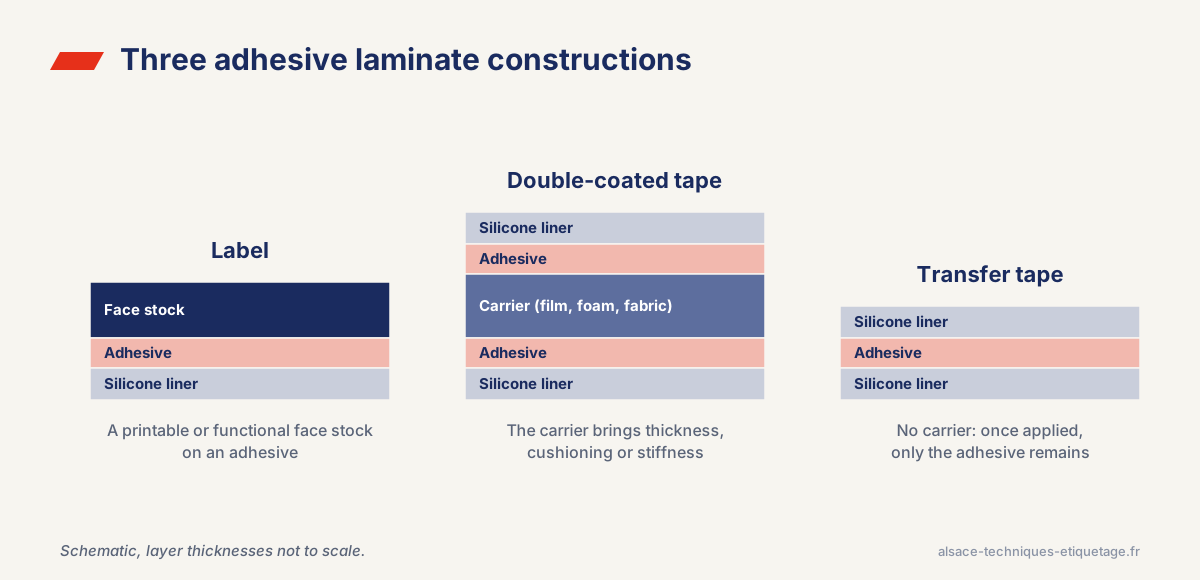
The material as the manufacturer supplies it to the converter, before any cutting: a face stock, an adhesive layer and a release liner. Choosing a part starts with choosing the laminate, since each layer has its own job.
Face stock
The top layer of the laminate: paper, plastic film, foam or fabric. On a label it carries the print. On a technical part it carries the function, such as the thickness of a foam or the strength of a film.
Permanent adhesive
Avery Dennison defines it as an adhesive that cannot be removed without damaging the label or the substrate. It is used on assembly parts and traceability labels.
Removable adhesive
According to the same source, it holds without lifting at the edges but comes off without damage. It suits temporary protection films and transit labels.
Repositionable adhesive
It can be lifted and placed again without losing its grip, so the position can be corrected during application.
Double-coated tape
A carrier (film, foam or fabric) coated with adhesive on both sides and protected by a liner. The carrier brings thickness, cushioning or stiffness. Our double-sided adhesives have their own page.
Transfer tape
An adhesive film on its own, with no carrier, supplied between one or two liners. Once applied, only adhesive remains between the two bonded parts. It is the thinnest way to join two components.
Release liner
The silicone-coated backing, paper or film, that protects the adhesive until application. It accounts for little of the part price but often decides whether automatic dispensing runs smoothly. We cover it in our article on release liners for automated application.
Bonding and testing
Surface energy
How readily a surface is wetted by an adhesive. The lower it is, the harder the bond: polypropylene and polyethylene are the classic examples.
Corona treatment
An electrical discharge applied to the surface of a film to raise its surface energy before printing or bonding. FINAT measures the surface tension of plastic films with its FTM 15 method. See our article on corona treatment.
Peel adhesion
The force needed to peel an adhesive off the surface it is applied to. FINAT measures it at 180° (FTM 1) or 90° (FTM 2), at 300 mm per minute. A peel value can only be compared with another measured by the same method, on the same substrate and after the same dwell time.
Tack
An adhesive’s instant grab on light contact, with no pressure applied. FINAT measures it with the loop method (FTM 9). High tack helps fast application but leaves little room for positioning errors.
Shear resistance
How well an adhesive holds under a load parallel to the surface, the kind that makes a hanging part slide. FINAT measures it from a standard surface (FTM 8) and dynamically (FTM 18).
Release force
The force needed to separate the liner from the adhesive. FINAT measures it at low speed (FTM 3) and at high speed, from 10 to 300 metres per minute (FTM 4). On an automatic line, it decides whether the part leaves its liner cleanly at the peel plate.
Cutting
Rotary die cutting
The material runs from the roll between a cutting cylinder and an anvil cylinder. The process is continuous, which makes it the production process. At ATE, we rotary die cut to a tenth of a millimetre on stable materials, with web widths up to 600 mm. Our rotary die cutting page describes the process.
Rotary die
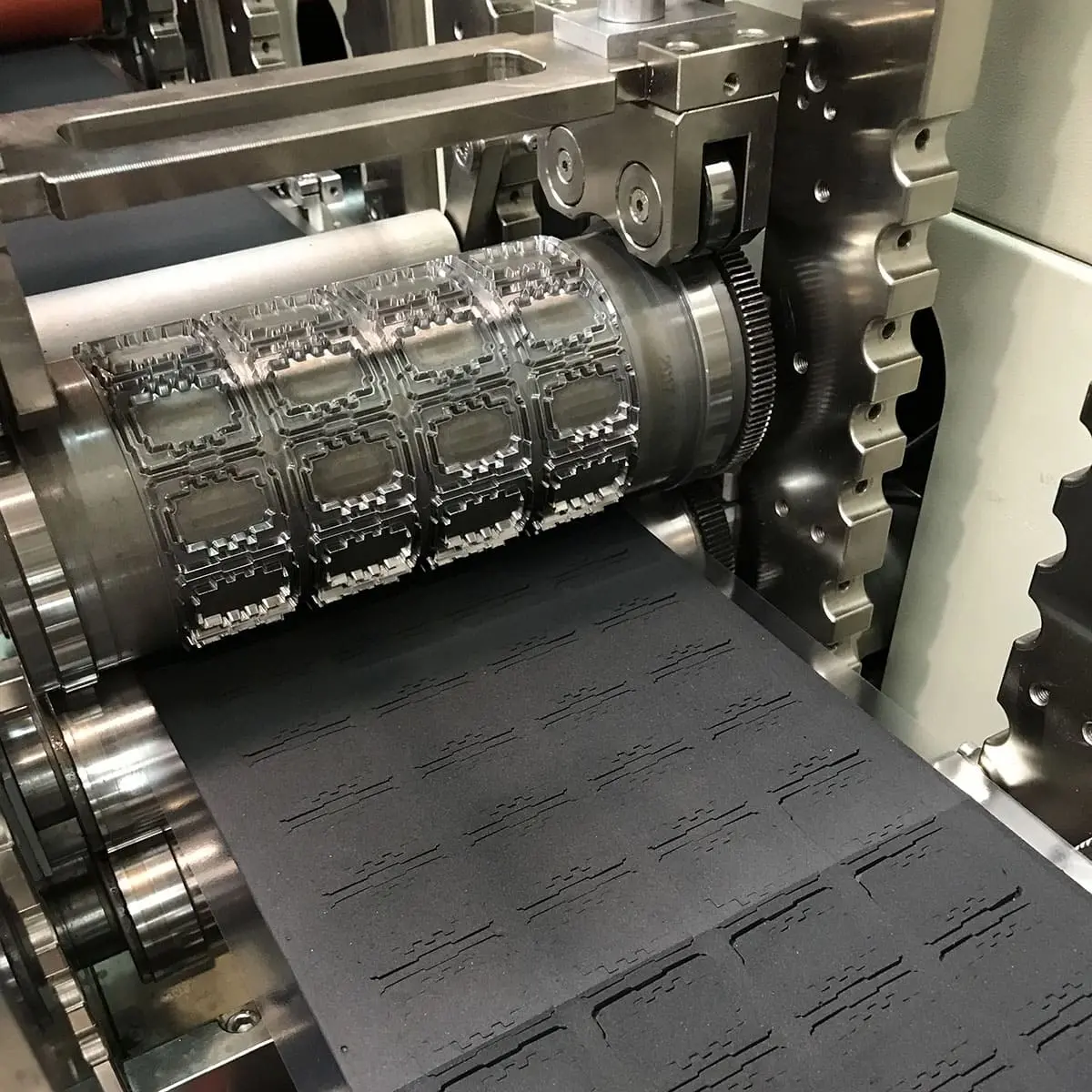
The cylinder that carries the blades in the exact shape of the part. Each new shape needs its own die. We make our own rotary dies: Rototechnix, our tooling company, cuts each one for the part, so the part never has to be adapted to an existing tool.
Digital cutting
A blade driven by the part file cuts the material on a flatbed, with no tool. It is the process for prototypes and short runs. Our digital cutter works to ±0.1 mm depending on settings and materials, at speeds of up to 1.41 m/s.
Laser cutting
A beam cuts the material without contact or tooling, which suits fine shapes and frequent design changes. We laser cut on web widths up to 330 mm.
Kiss-cut
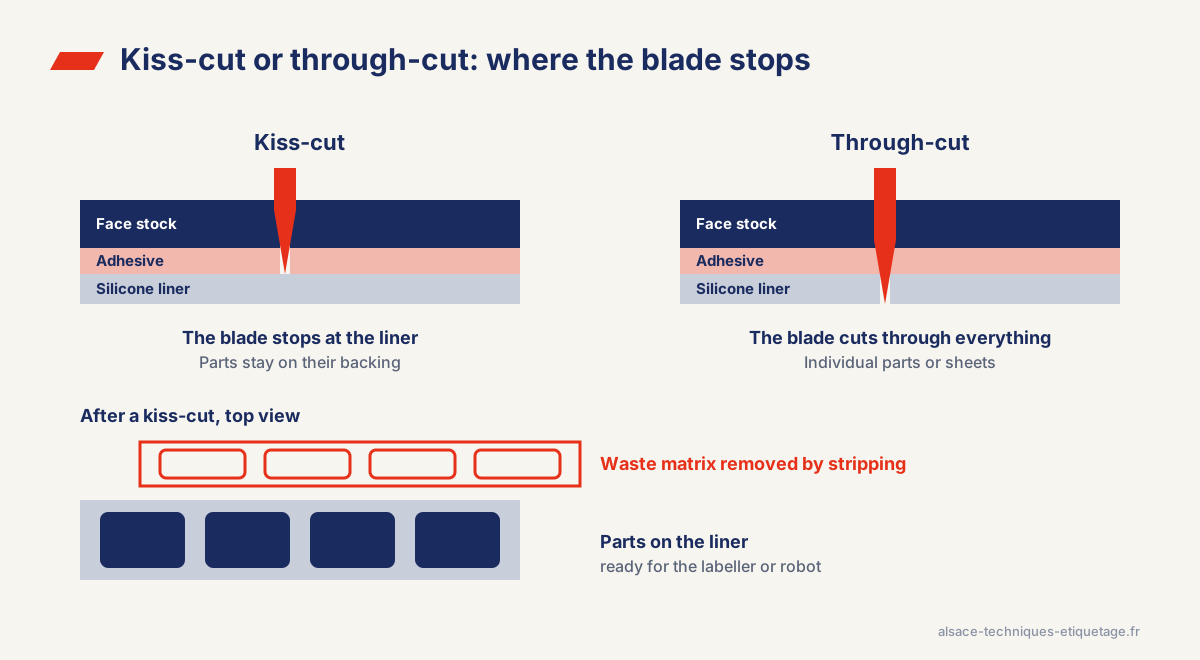
The cut goes through the face stock and the adhesive without cutting into the liner. The parts stay lined up on their backing, ready for a labelling machine or a robot. In French, it is called mi-chair.
Through-cut
The cut goes through the full thickness, liner included. The result is individual parts, or sheets cut to their outer shape.
Matrix stripping
Removing the material that surrounds the parts after a kiss-cut. It looks like a minor step, but a matrix that breaks stops the machine. FINAT lists a tight release and a gap of 2 mm or less between parts among the causes.
Waste matrix
The ladder-shaped waste removed during stripping. For a part placed by a robot, whether the matrix is removed or left in place is decided at design stage. Our article on robotic placement covers this point.
Slitting and log slitting
Two ways to bring a material to the required width. Slitting cuts the web as it unwinds. Log slitting cuts a wide, already wound roll into narrower rolls. We log slit from 3 to 1,500 mm wide, with a possible tolerance of 0.3 mm depending on the material.
Tolerance
The permitted deviation on a dimension. It depends as much on the material as on the process: a thick foam does not hold a dimension the way a polyester film does. That is why we confirm the achievable tolerance at quotation, on the material selected.
Format and packaging
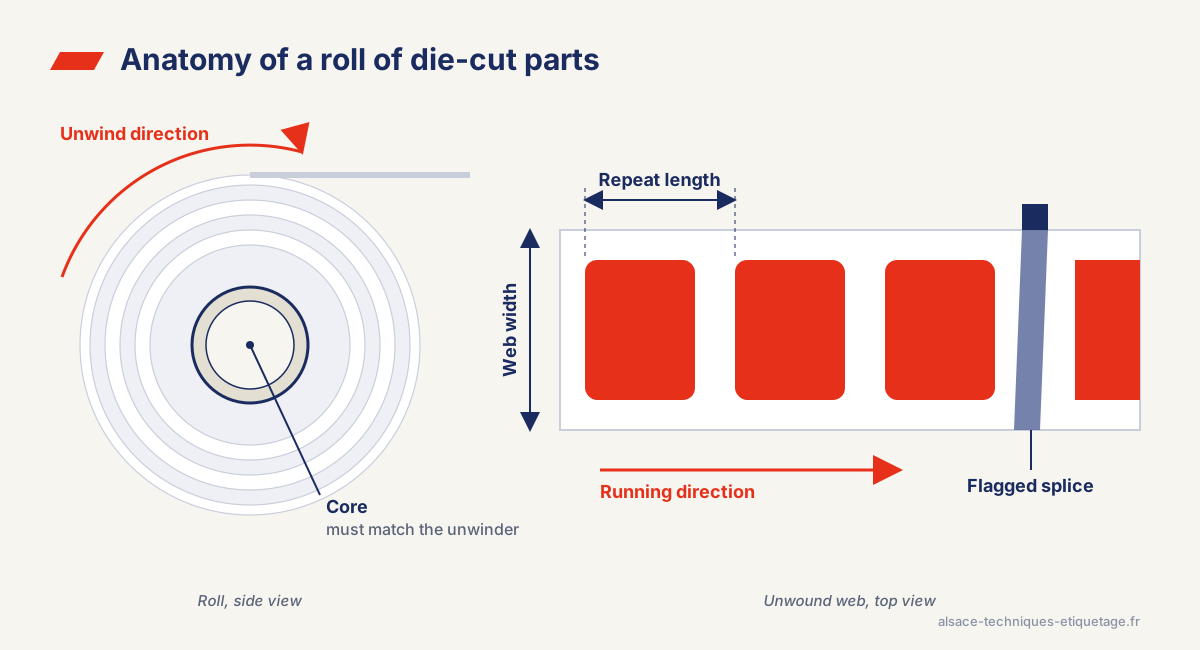
Web width
The width of the material web, or of the delivered roll. It sets how many parts run side by side and has to match the customer’s unwinder.
Repeat length
The distance between two identical consecutive parts, in the running direction. The sensor on the labelling machine or robot works from this value, so a wrongly specified repeat length shows up when the line is set up.
Core
The cardboard or plastic tube at the centre of the roll. Its inside diameter has to match the unwinder shaft.
Unwind direction
How the parts are oriented on the roll: wound out or wound in, head or foot first. It sets the way the part arrives at the gripper. It belongs in the specification, otherwise the roll has to be rewound.
Sheet
A flat format, for manual application or short runs.
Splice
A join between two webs inside a roll. The specification states whether splices are allowed, how many and how they are flagged, because an unflagged splice can stop a line.
Converting and printing
Laminating
Bonding several layers of material with an adhesive to obtain properties no single layer has. See our laminating page and our guide to choosing a laminating film.
Overlaminating
Applying a thin protective film over a print, against rubbing or cleaning agents.
Registration
The alignment between print and cut, so the design lands in the right place on every part. Since we print and cut in-house, registration is set in the same plant, with no hand-over between two suppliers.
Variable data
Print that differs on every part: serial number, barcode, QR code or Data Matrix. It is done by digital printing.
What these terms change in a quote
An RFQ that states the material, tolerance, web width, repeat length, core, unwind direction and type of cut can be quoted without back-and-forth. One that gives only a drawing and a quantity means asking those questions, or assuming the answers.
The capabilities published on our technical pages give a first reference point for your part.
| Process | Capability | Typical use |
|---|---|---|
| Rotary die cutting | To a tenth of a millimetre on stable materials, web width up to 600 mm, dies made in-house | Production runs, parts on rolls |
| Digital cutting | ±0.1 mm depending on settings and materials, up to 1.41 m/s | Prototypes, short runs |
| Laser cutting | Web width up to 330 mm | Fine shapes, prototypes |
| Log slitting | From 3 to 1,500 mm, possible tolerance of 0.3 mm depending on the material | Bringing rolls to width |
We work from 700 raw materials, under IATF 16949 certification, with an ISO 7 cleanroom for parts that require one.
Frequently asked questions
What is a kiss-cut?
A cut that goes through the face stock and the adhesive without cutting the liner. The parts stay on their backing, ready for a labelling machine or a robot. In French, it is called mi-chair.
What is the difference between web width and repeat length?
Web width is the width of the material web. Repeat length is the distance between two consecutive parts in the running direction. Both have to match the customer’s application equipment.
What is the difference between double-coated tape and transfer tape?
Double-coated tape has a carrier (film, foam or fabric) coated with adhesive on both sides. Transfer tape is an adhesive film on its own, with no carrier: once applied, only adhesive remains between the two parts.
What is matrix stripping?
Removing the material that surrounds the parts after a kiss-cut. This ladder-shaped waste is called the waste matrix. If it breaks, the machine stops.
How is adhesion measured?
Most often with a peel test. FINAT describes it at 180° (FTM 1) or 90° (FTM 2), at 300 mm per minute. A value only means something alongside its method, substrate and dwell time.