We rotary die cut adhesive and flexible parts in film, foam, paper and double-sided tape, up to 600 mm web width and to a tenth of a millimetre depending on the material. We make our own rotary dies, which means the die is cut for the part. Our plants are IATF 16949 certified since 2019, with an ISO 7 cleanroom area.
Rotary die cutting explained
Rotary die cutting runs continuously: an engraved cylindrical die turns against an anvil roll while the web feeds between them. It is the process of the repeat order. The die costs money once, then each part costs very little.
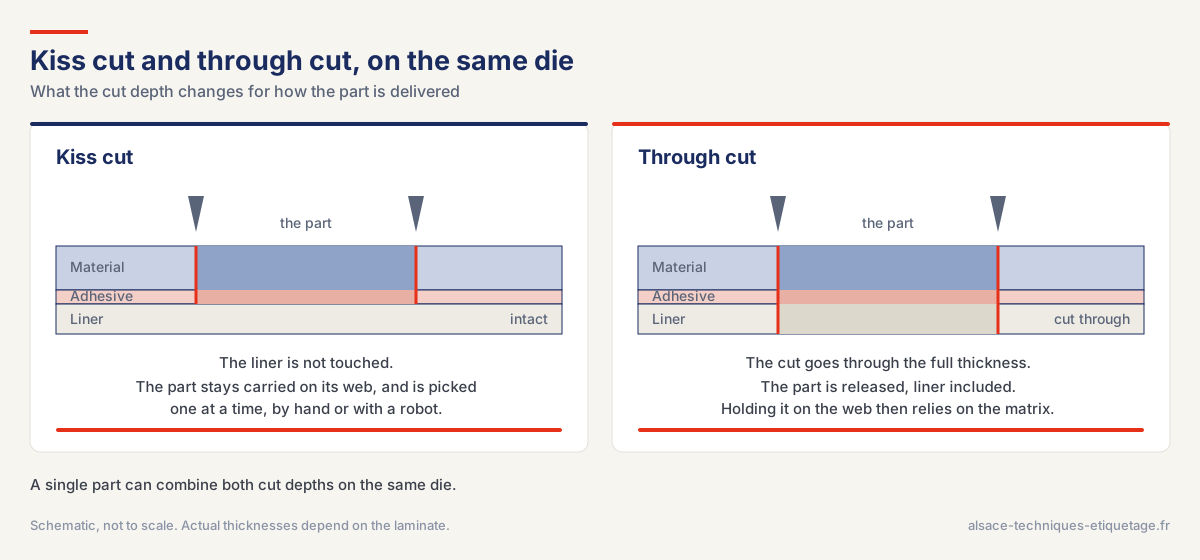
Two cut depths coexist on the same die. A kiss cut goes through the material and its adhesive only, leaving the liner intact: the part stays carried on its web, which is what lets us deliver it in a roll and lets you pick it one at a time, by hand or with a robot. A through cut goes through the full thickness, liner included, and releases the part. A single part can combine both.
What we run most often in rotary:
- Gaskets and sealing parts in foam
- Mounting parts in double-sided tape or transfer adhesive, often with a pick tab designed in for placement
- Protective and insulating films, usually as multilayer laminates
We make our own rotary dies
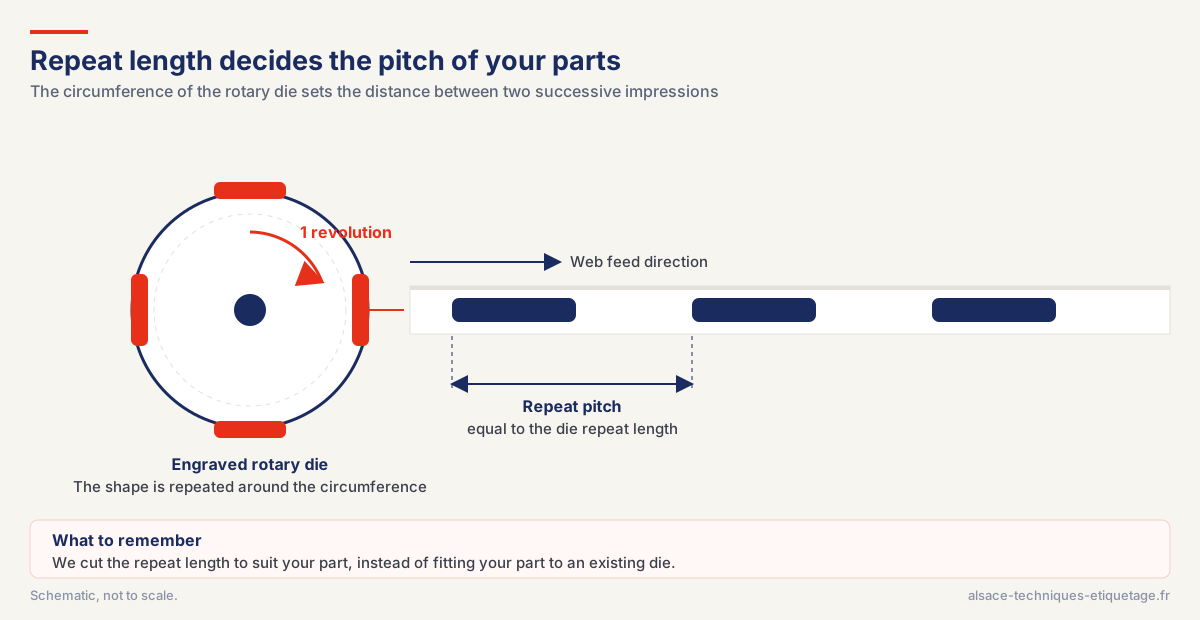
Tooling is not subcontracted. Rototechnix, our tooling company, cuts the rotary dies we run. So we do not pick a die off a catalogue: instead of adapting your part to an existing die, we have the die made that matches your part.
That is what lets us cut a repeat length to suit your pitch rather than imposing ours. It is also what lets us build into the engraving whatever your placement station needs, a pick tab, a deadened adhesive area or a liner slit, and then rework the die if the part changes during series life.
The most concrete consequence is lead time. A die modification does not go into a supplier’s queue: it is handled in house, between people who already know the part.
Our certifications and series qualification
With an automotive or medical customer, this is the part that decides whether you go to series production, far more than the raw performance of the process.
Our plants are IATF 16949 certified since 2019, with an ISO 7 cleanroom production area for the parts that require it, and we are a 3M Preferred Converter. In practice, on a rotary die cut part, that means a control plan, traceability by material and die batch, and monitoring of die wear over the production run.
Get your part quoted
Send us the part drawing, the material you have in mind, the annual volume and the placement method. We will tell you whether rotary is the right process, what the repeat length imposes on your geometry, and what the die costs.
If you are still hesitating between processes, send the drawing anyway: it is quicker to settle on a real part than on a description.
A continuous cutting process: an engraved cylindrical die turns against an anvil roll while the web of material feeds between the two. It allows kiss cutting, where only the material is cut and the liner is left intact, as well as through cutting. It is the process for repeat production runs, because the die is a fixed cost that volume absorbs.
We work to a tenth of a millimetre on stable materials, up to 600 mm web width. The value actually achieved depends on the material family: a thick foam and a thin film do not behave the same way under the die. We confirm the tolerance we can hold on your part at quotation stage, on the material selected.
It becomes worthwhile when the volume absorbs the die. Below that, digital flatbed cutting, which needs no tooling, works out cheaper. The threshold depends on the die price, the annual volume and the material, and it is calculated on your part. Send us the drawing and the volume and we will give you the crossover point.
Yes, but a change to the cut geometry means a new die, and depending on your quality standard it may call for a simple document update or a full PPAP submission. That question is handled with the engineering team before the change is launched.
Films, foams, papers, double-sided tapes, transfer adhesives and multilayer laminates, from a stock of 700 raw materials. The choice of laminate is settled before cutting, because it governs both how the part performs in service and how it behaves under the die.


