Manufacturing cycles are getting shorter. Product variants are multiplying. Regulatory traceability requirements are tightening, particularly in medical devices and electronics. Across every one of these shifts, one production constraint keeps resurfacing: how do you label and convert small batches without absorbing the fixed costs designed for high-volume runs?
Short run digital label printing has become the default answer for a growing number of industrial buyers. The technology itself isn’t new — but its role in mainstream production planning is. Here’s what actually changes when a label or flexible component moves from a conventional press to a digital one, and where the crossover point with traditional processes sits.
What “Short Run Digital Printing” Actually Means
Digital printing transfers a file directly onto the substrate : there is no flexographic plates, no screen-printing frames, no rotary tooling to manufacture beforehand. The production file is the tool.
In an industrial context, this applies to technical labels (identification, traceability, compliance marking) as well as certain flexible adhesive components on polyester, polypropylene, vinyl, and other technical films. Because there’s no physical intermediary between the file and the finished part, most of the advantages below follow directly from the absence of tooling.
Key Benefits for Short-Run Production
1. No Make-Ready or Plate Costs
Flexographic printing requires a plate per color; screen printing requires a screen per design. Those tooling costs are fixed, and below a certain volume, the cost-per-unit they impose stops making economic sense. Digital printing removes that line item entirely — a run of 50 labels costs proportionally close to the same per unit as a run of 500. That’s a structural change to how short runs get priced, not just a marginal saving.
2. Compressed Lead Times
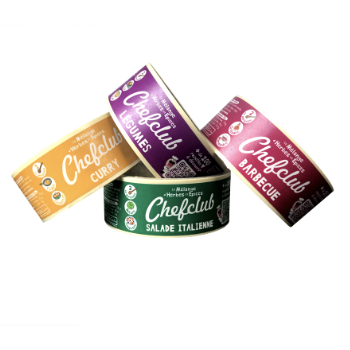
With no plates or screens to produce, the gap between file approval and production start drops sharply. For engineering teams managing urgent prototypes, maintenance replacements, or date-constrained launches, that compression often matters more than the per-unit cost.
Digital runs typically ship in days rather than the weeks a conventional process requires once plate-making and press make-ready are factored in.
3. Variable Data Printing (VDP)
This is where digital printing diverges most from conventional processes and it’s increasingly a compliance requirement rather than a convenience. Serial numbers, QR codes, lot and expiry codes, or market-specific text can change from one piece to the next within a single run, with no production interruption and no added cost.
For medical device manufacturers, this maps directly onto UDI (Unique Device Identification) requirements under the FDA rule in the US and EU MDR in Europe, both of which mandate serialized, traceable labeling at the unit level. For electronics manufacturers managing frequent revision changes or multi-market SKUs, the same capability eliminates a major source of labeling errors and stock duplication.
4. No Compromise on Print Quality
A common misconception is that digital printing trades quality for flexibility. Current UV inkjet and toner-based systems deliver high resolution, accurate color reproduction, and gradient handling that screen printing struggles to match past a few spot colors. Fine text, high-density barcodes, and regulatory pictograms print at a clarity comparable to industrial offset.
5. Expanding Substrate Range
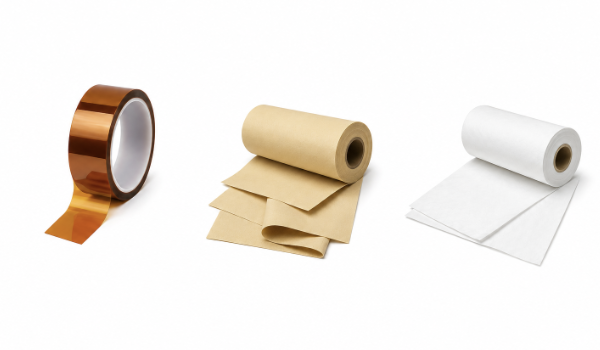
UV inkjet and toner technologies now run reliably across polyester, polypropylene, vinyl, and a growing list of technical papers. That said, for higher-constraint applications : extreme temperatures, aggressive chemical exposure, cleanroom environments , specialty materials such as Kapton®, Nomex®, or Tyvek® need substrate-specific compatibility testing; digital compatibility isn’t automatic across every technical film.
When Does Short Run Digital Printing Make Sense?
- New product introduction (NPI) and prototyping: runs of 20–200 units to validate a design before committing to tooling for full-scale production. Digital lets engineering teams iterate fast without sinking cost into plates that may need revision.
- Recurring short runs with variants: orders in the 100–2,000 unit range, placed several times a year, where the design changes slightly between batches. Digital absorbs that variability without friction.
- On-demand inventory: rather than stocking large label quantities with obsolescence risk, companies order what they need when they need it : a meaningful shift for anyone managing multi-market SKUs or frequent regulatory text updates.
- Serialized and traceable components: any requirement for UDI compliance, lot tracking, QR-based traceability, or market-specific variable text.
- Tight turnarounds: production emergencies, stock replacements, or launches tied to a fixed date.
Digital vs. Conventional: Where Volume Tips the Balance
Digital printing isn’t universally the better option. Past roughly 5,000–10,000 units — the exact threshold depends on format and complexity — conventional processes regain the cost advantage. Flexography in particular pulls ahead at scale, with stronger color consistency run-over-run and faster throughput once plates are made.
The right process is a function of volume and technical constraints, not a fixed preference. Most industrial buyers who plan long-term end up running both: digital for development phases and short runs, conventional for established high-volume programs.
What This Means for Your Sourcing Strategy
Bringing short run digital printing into a supply chain changes how inventory gets planned. Smaller, more frequent on-demand orders can replace large stocked batches — reducing obsolescence risk and exposure to last-minute regulatory text changes.
It also compresses the gap between identifying a labeling need and having that component on the production line.
To get full value from it, file preparation, substrate compatibility, and color management remain the variables that determine output quality. A technical partner capable of validating those parameters upfront rather than simply running the file as submitted is what separates a usable result from a costly reprint.